Overview
Gråfjell is a granite plateau approximately forty kilometres from Bergen, at an elevation of 600 metres. In winter it is inaccessible. In summer it is one of the most remote and beautiful landscapes in southern Norway. The client — a Bergen-based family with three adult children — asked for three small cabins on a site they had owned for thirty years but never built on.
The commission raised the only question that matters in landscape architecture: does this building earn its place?
Design
The three cabins are scattered across the plateau rather than grouped. Each has its own relationship to the landscape: the first faces south toward the valley; the second sits in a natural hollow, sheltered from the prevailing wind; the third is positioned at the highest point of the site, exposed and commanding.
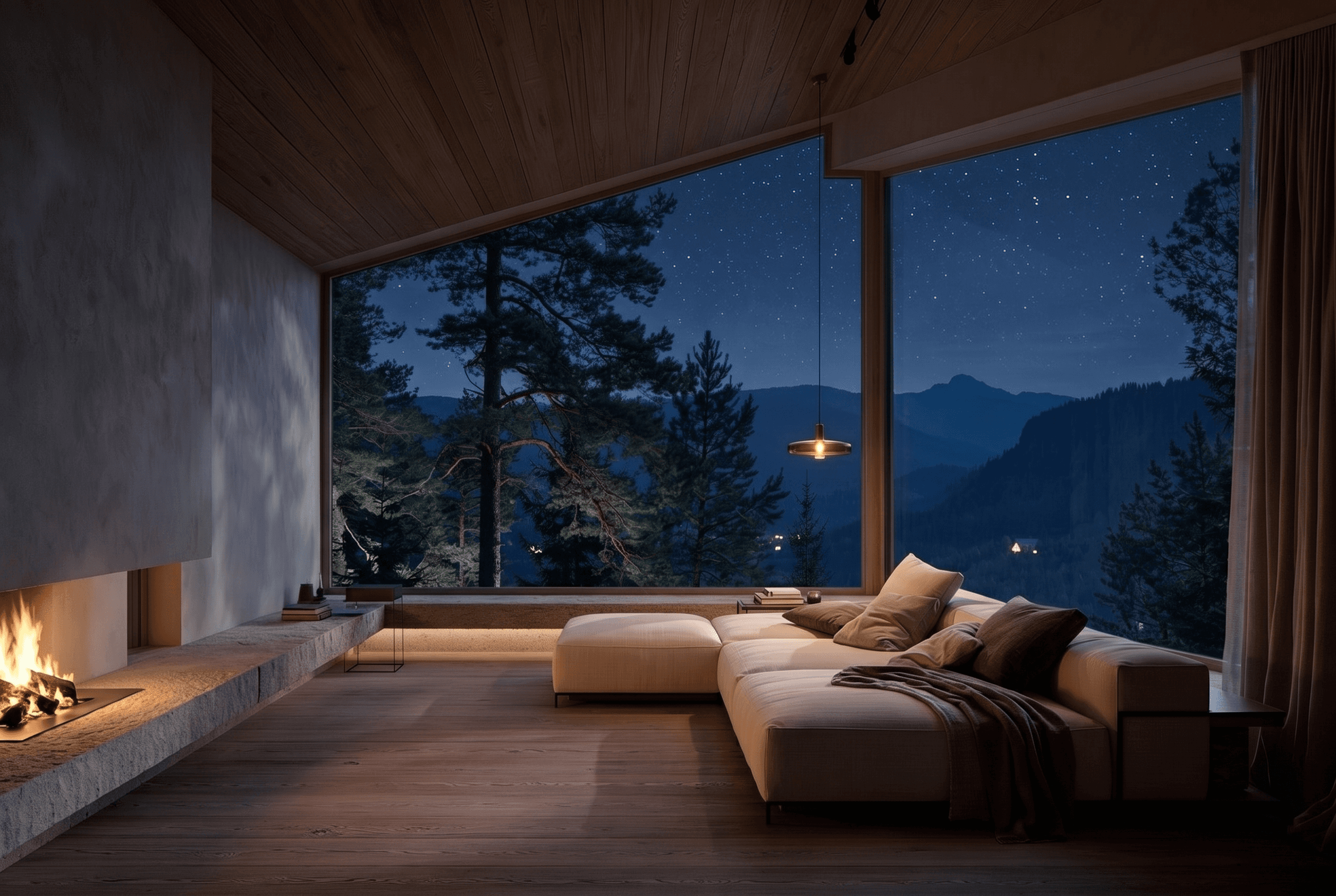
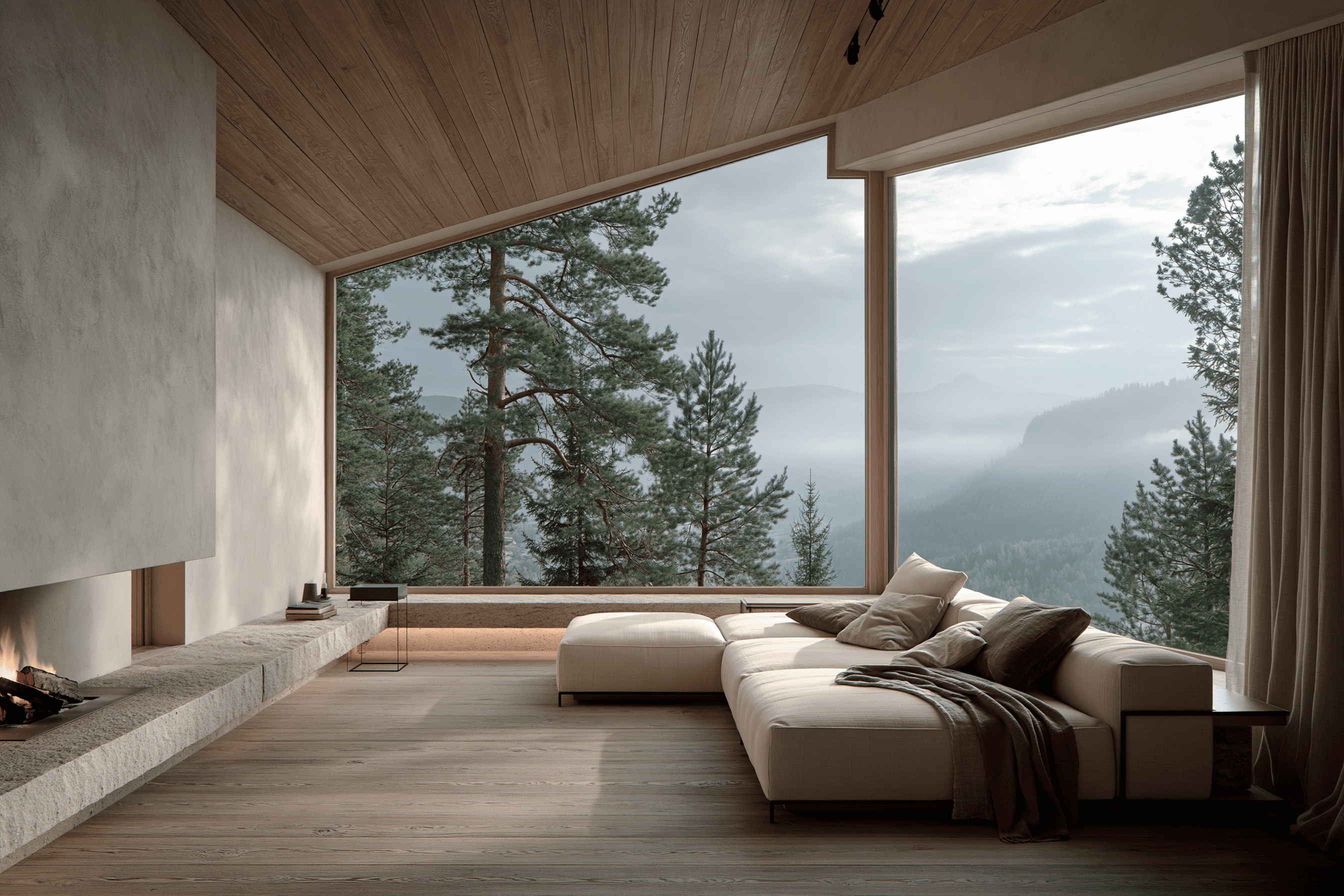
Each cabin is small — approximately forty square metres — and contains only what is necessary: a sleeping area, a kitchen, a bathroom, and a single large window aligned to the primary view. There is no interior circulation. You move between spaces by going outside.
This decision — to externalise circulation — was the most important design move of the project. It means that every transition between sleeping, eating, and washing requires an encounter with the landscape. You cannot forget where you are.
Construction
Construction on a remote granite plateau presents particular challenges. There is no road access. All materials were delivered by helicopter in three lifts over two summers. The construction team lived on site for the duration of each build phase.
The structural system was designed to be assembled entirely with hand tools. No cranes, no heavy equipment. The dark timber frame is bolted together with exposed steel connectors — the joints are visible, the structure is readable. The cabins are designed to be disassembled and removed without trace.
Materials
Dark-stained Norwegian pine, zinc roofing, and raw granite. The timber will weather over time to a silver-grey that matches the surrounding rock. The zinc roof is already the colour of a cloudy sky. Within five years, the cabins will be almost invisible from a distance.
Interior finishes are minimal: pine boards, a single wool rug in each cabin, a cast-iron stove. The windows are triple-glazed to manage the temperature extremes, set flush with the exterior wall surface so that there is no shadow gap to interrupt the plane of the facade.
Outcome
The three cabins were completed in autumn 2021. The family uses them collectively and independently, arriving by a combination of road and foot. They report that the forty-five minute walk from the road to the site is not an inconvenience but an essential part of the experience — the distance the landscape requires before it will be entered. We could not have designed that. We could only design something worthy of it.
Overview
Gråfjell is a granite plateau approximately forty kilometres from Bergen, at an elevation of 600 metres. In winter it is inaccessible. In summer it is one of the most remote and beautiful landscapes in southern Norway. The client — a Bergen-based family with three adult children — asked for three small cabins on a site they had owned for thirty years but never built on.
The commission raised the only question that matters in landscape architecture: does this building earn its place?
Design
The three cabins are scattered across the plateau rather than grouped. Each has its own relationship to the landscape: the first faces south toward the valley; the second sits in a natural hollow, sheltered from the prevailing wind; the third is positioned at the highest point of the site, exposed and commanding.
Each cabin is small — approximately forty square metres — and contains only what is necessary: a sleeping area, a kitchen, a bathroom, and a single large window aligned to the primary view. There is no interior circulation. You move between spaces by going outside.
This decision — to externalise circulation — was the most important design move of the project. It means that every transition between sleeping, eating, and washing requires an encounter with the landscape. You cannot forget where you are.
Construction
Construction on a remote granite plateau presents particular challenges. There is no road access. All materials were delivered by helicopter in three lifts over two summers. The construction team lived on site for the duration of each build phase.
The structural system was designed to be assembled entirely with hand tools. No cranes, no heavy equipment. The dark timber frame is bolted together with exposed steel connectors — the joints are visible, the structure is readable. The cabins are designed to be disassembled and removed without trace.
Materials
Dark-stained Norwegian pine, zinc roofing, and raw granite. The timber will weather over time to a silver-grey that matches the surrounding rock. The zinc roof is already the colour of a cloudy sky. Within five years, the cabins will be almost invisible from a distance.
Interior finishes are minimal: pine boards, a single wool rug in each cabin, a cast-iron stove. The windows are triple-glazed to manage the temperature extremes, set flush with the exterior wall surface so that there is no shadow gap to interrupt the plane of the facade.
Outcome
The three cabins were completed in autumn 2021. The family uses them collectively and independently, arriving by a combination of road and foot. They report that the forty-five minute walk from the road to the site is not an inconvenience but an essential part of the experience — the distance the landscape requires before it will be entered. We could not have designed that. We could only design something worthy of it.
type
Interior
Location
Bergen, NO
Year
2025