Overview
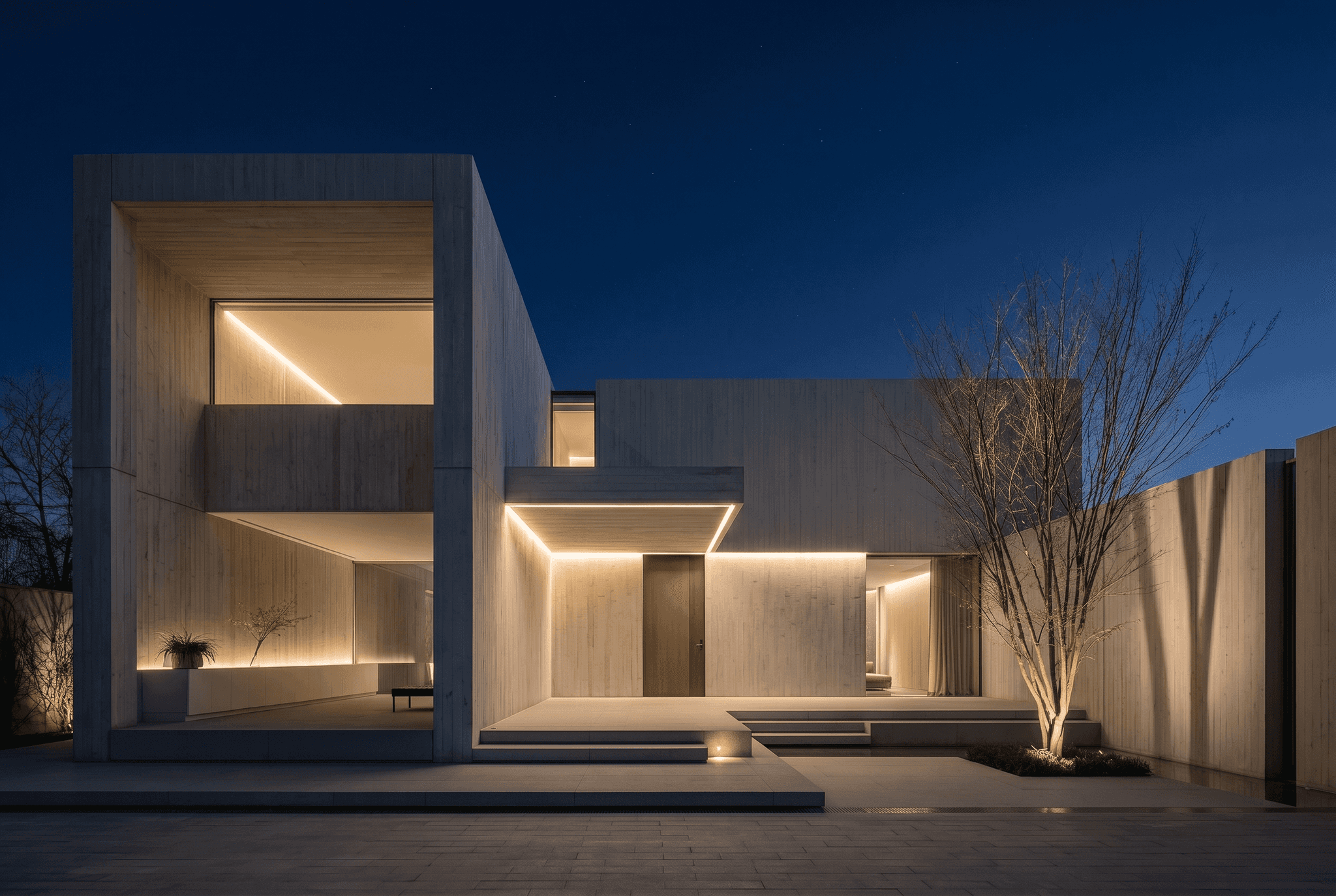
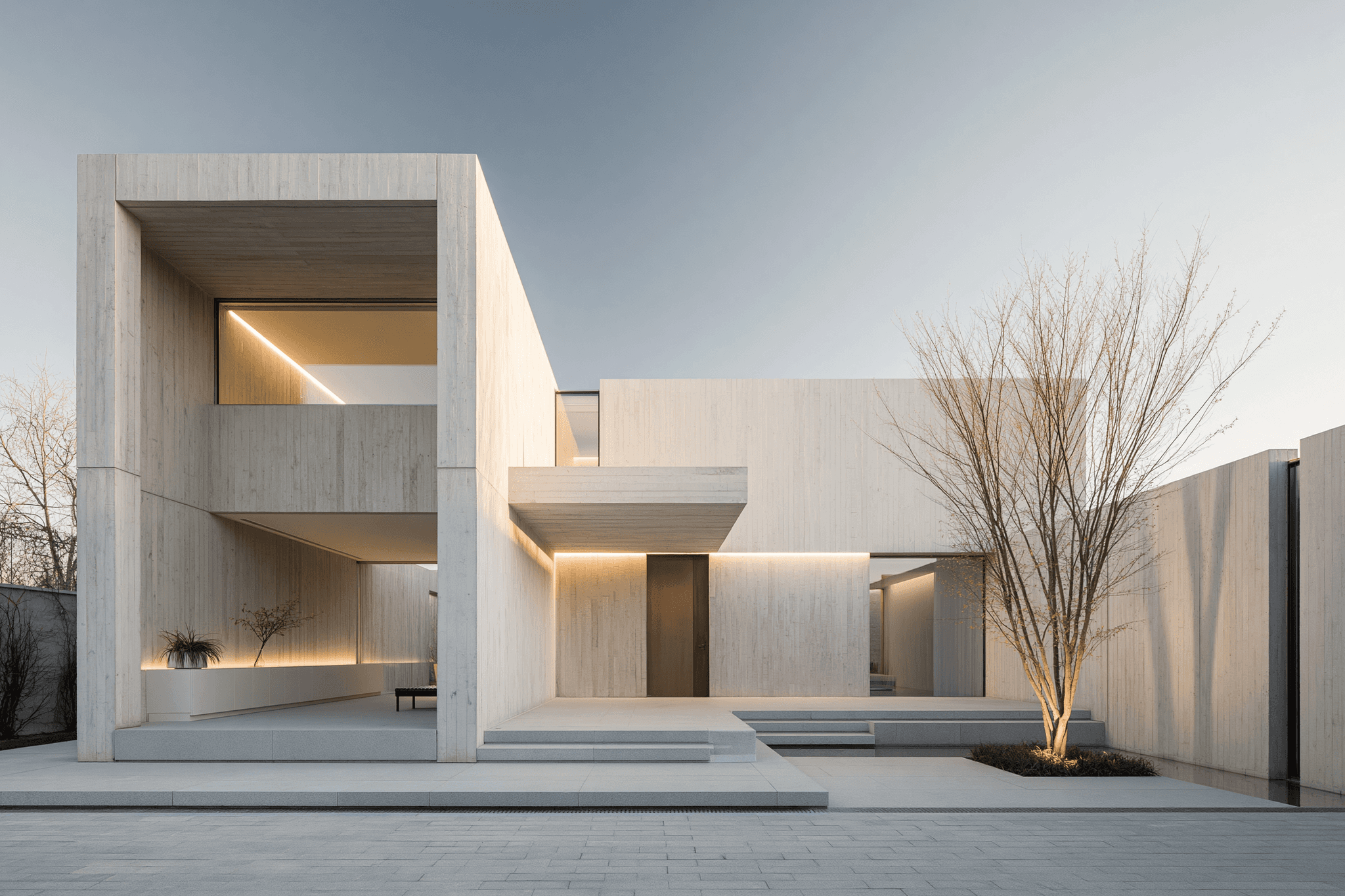
Kōan House is a private residence situated on the edge of a forested hillside in the outskirts of Tokyo. The brief was simple: a home for two people who wanted to live with less. What emerged was a building that treats silence as a material — as considered and load-bearing as the concrete it is made from.
The name derives from the Zen concept of the kōan: a question with no logical answer, designed to exhaust the thinking mind and open something quieter beneath. The house is built around a similar logic. Every decision was made by subtraction.
Design
The building is a single horizontal volume, low and continuous, set into the slope so that it neither dominates nor disappears. The facade is almost entirely closed to the street — a long uninterrupted plane of board-formed concrete, broken only by a narrow slot of glazing that runs the full width of the upper level.
Entry is through a compressed threshold: a dark corridor that forces the body to slow before releasing into the central living space. This transition — compression before release — is the defining spatial experience of the house.
The interior is organised around a single large room that opens entirely to the garden through floor-to-ceiling glazing. The boundary between inside and outside is treated as a threshold rather than a barrier. In summer, the glass disappears. In winter, it frames the garden like a slow painting.
Materials
The material palette was deliberately constrained: raw board-formed concrete, ancient cedar, and polished black stone. No paint. No plaster. No applied finish. Every surface is what it is.
The cedar was sourced from a single forest in Nagano Prefecture and allowed to age in place. The concrete was poured in a single continuous sequence to avoid cold joints. The stone floor is laid in slabs large enough that the pattern disappears — the floor reads as a single dark plane.
Light
Light was the primary design tool. The building was modelled across every hour of every season before a single structural decision was made. The narrow slot window on the upper facade admits morning light at a precise angle that moves across the back wall like a slow sundial. The garden-facing glazing admits afternoon light that deepens as the day progresses.
There are no overhead lights in the main living space. Illumination comes entirely from indirect sources — light reflected from surfaces, light borrowed from adjacent rooms. The house grows darker as evening comes. This was intentional.
Outcome
Kōan House received the Japan Institute of Architects Residential Award in 2027. More importantly, its occupants report that they sleep better than they ever have. Sometimes that is enough.
Overview
Kōan House is a private residence situated on the edge of a forested hillside in the outskirts of Tokyo. The brief was simple: a home for two people who wanted to live with less. What emerged was a building that treats silence as a material — as considered and load-bearing as the concrete it is made from.
The name derives from the Zen concept of the kōan: a question with no logical answer, designed to exhaust the thinking mind and open something quieter beneath. The house is built around a similar logic. Every decision was made by subtraction.
Design
The building is a single horizontal volume, low and continuous, set into the slope so that it neither dominates nor disappears. The facade is almost entirely closed to the street — a long uninterrupted plane of board-formed concrete, broken only by a narrow slot of glazing that runs the full width of the upper level.
Entry is through a compressed threshold: a dark corridor that forces the body to slow before releasing into the central living space. This transition — compression before release — is the defining spatial experience of the house.
The interior is organised around a single large room that opens entirely to the garden through floor-to-ceiling glazing. The boundary between inside and outside is treated as a threshold rather than a barrier. In summer, the glass disappears. In winter, it frames the garden like a slow painting.
Materials
The material palette was deliberately constrained: raw board-formed concrete, ancient cedar, and polished black stone. No paint. No plaster. No applied finish. Every surface is what it is.
The cedar was sourced from a single forest in Nagano Prefecture and allowed to age in place. The concrete was poured in a single continuous sequence to avoid cold joints. The stone floor is laid in slabs large enough that the pattern disappears — the floor reads as a single dark plane.
Light
Light was the primary design tool. The building was modelled across every hour of every season before a single structural decision was made. The narrow slot window on the upper facade admits morning light at a precise angle that moves across the back wall like a slow sundial. The garden-facing glazing admits afternoon light that deepens as the day progresses.
There are no overhead lights in the main living space. Illumination comes entirely from indirect sources — light reflected from surfaces, light borrowed from adjacent rooms. The house grows darker as evening comes. This was intentional.
Outcome
Kōan House received the Japan Institute of Architects Residential Award in 2027. More importantly, its occupants report that they sleep better than they ever have. Sometimes that is enough.
type
Residential
Location
Tokyo, JP
Year
2026