Overview
Lichten is a Berlin-based technology company that builds infrastructure software for the financial sector. Their brief for a new headquarters was unusually precise: a building that expressed the quality of their thinking. Not a statement of success, but a statement of seriousness.
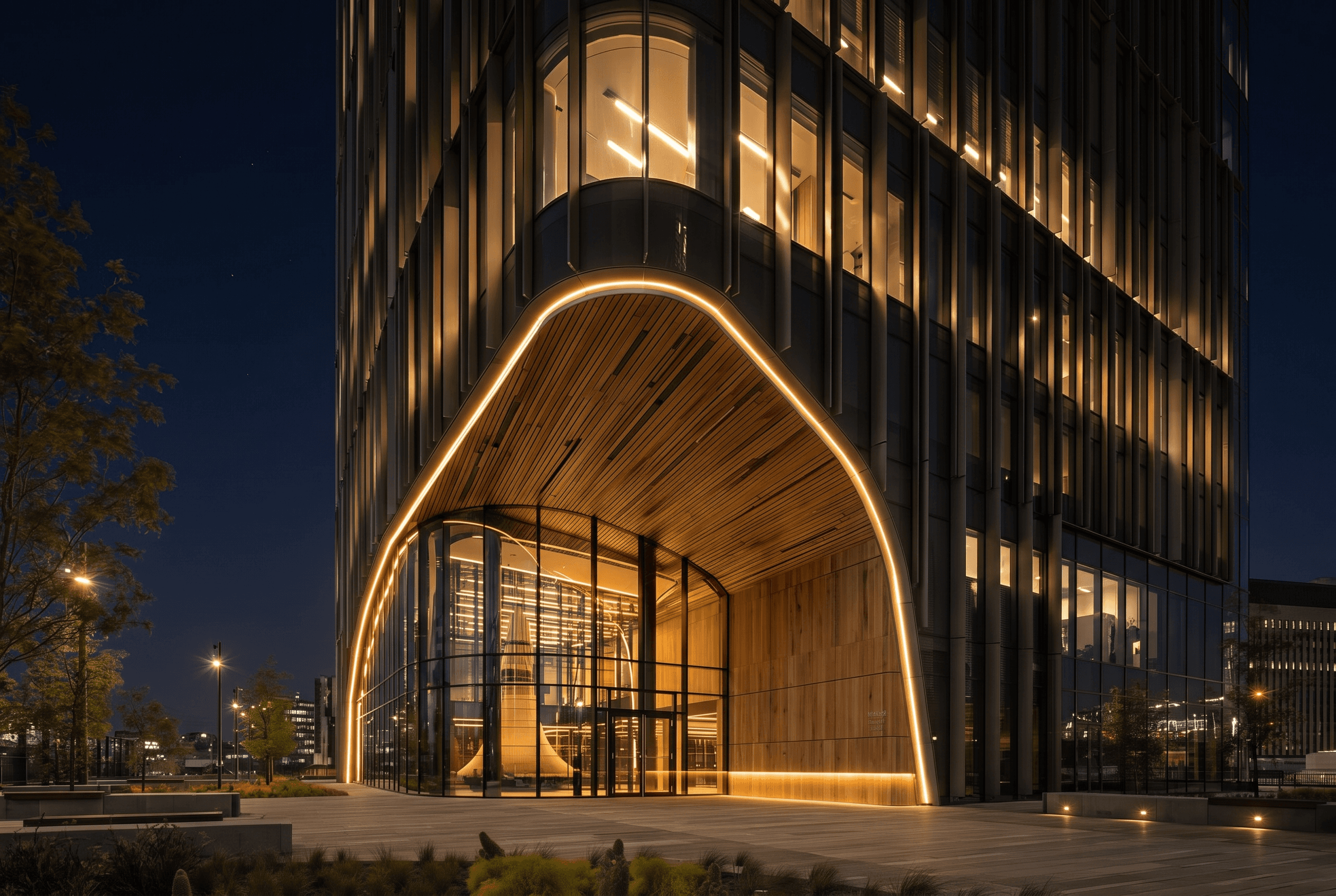
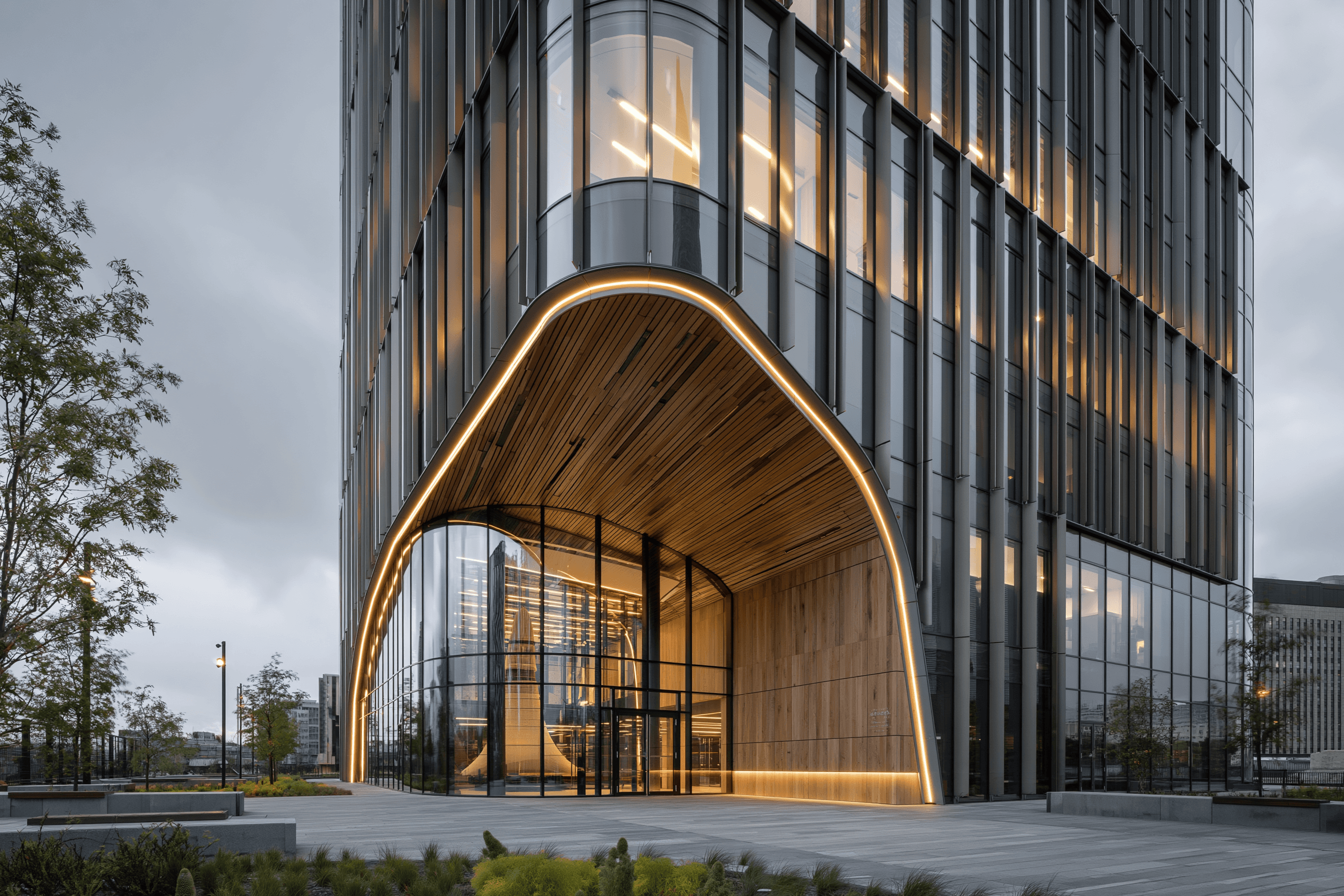
The site is a full city block in Berlin-Mitte, adjacent to the Spree. The previous building — a post-reunification commercial block of no distinction — was demolished. What replaced it is a seven-storey glass and concrete building that holds its place on the street with quiet authority.
Design
The building is organised around a central atrium that rises the full height of the structure. This void is the building's primary architectural move: a space that is not lettable, not productive, not efficient — and entirely necessary. It is the breath of the building.
The atrium admits daylight from a full-width rooflight, pulling light through all seven floors and eliminating the need for artificial illumination in the central circulation spaces during daylight hours. The energy modelling confirmed what the design intuition suggested: the atrium pays for itself.
The facade is a full-height curtain wall of triple-glazed glass in dark-anodised aluminium frames. The grid of the facade corresponds exactly to the structural grid of the building behind it — there is no gap between what the building shows and what it is.
Workplace
The interior planning was developed in close collaboration with Lichten's operations team over a period of eighteen months. The result is a workplace built around the principle that good work requires both connection and solitude — and that most offices provide neither.
Each floor is divided into three zones: a central collaborative area adjacent to the atrium, a quieter perimeter zone with individual workstations, and a series of enclosed meeting rooms along the north facade. The zones are separated by changes in ceiling height and material rather than by walls. The distinction is spatial rather than physical.
Materials
Dark weathered steel, concrete, and glass. The interior floors are polished concrete on the ground and first floor, dark oak above. All workstation surfaces are solid concrete — heavy, permanent, and deliberately resistant to the casual reconfiguration that characterises most modern offices. The furniture is fixed. The people move.
Outcome
The building was completed on programme and within budget. Lichten reports that staff retention has increased significantly since the move, and that the quality of the building has become a meaningful factor in recruitment. Glass and steel, built to last.
Overview
Lichten is a Berlin-based technology company that builds infrastructure software for the financial sector. Their brief for a new headquarters was unusually precise: a building that expressed the quality of their thinking. Not a statement of success, but a statement of seriousness.
The site is a full city block in Berlin-Mitte, adjacent to the Spree. The previous building — a post-reunification commercial block of no distinction — was demolished. What replaced it is a seven-storey glass and concrete building that holds its place on the street with quiet authority.
Design
The building is organised around a central atrium that rises the full height of the structure. This void is the building's primary architectural move: a space that is not lettable, not productive, not efficient — and entirely necessary. It is the breath of the building.
The atrium admits daylight from a full-width rooflight, pulling light through all seven floors and eliminating the need for artificial illumination in the central circulation spaces during daylight hours. The energy modelling confirmed what the design intuition suggested: the atrium pays for itself.
The facade is a full-height curtain wall of triple-glazed glass in dark-anodised aluminium frames. The grid of the facade corresponds exactly to the structural grid of the building behind it — there is no gap between what the building shows and what it is.
Workplace
The interior planning was developed in close collaboration with Lichten's operations team over a period of eighteen months. The result is a workplace built around the principle that good work requires both connection and solitude — and that most offices provide neither.
Each floor is divided into three zones: a central collaborative area adjacent to the atrium, a quieter perimeter zone with individual workstations, and a series of enclosed meeting rooms along the north facade. The zones are separated by changes in ceiling height and material rather than by walls. The distinction is spatial rather than physical.
Materials
Dark weathered steel, concrete, and glass. The interior floors are polished concrete on the ground and first floor, dark oak above. All workstation surfaces are solid concrete — heavy, permanent, and deliberately resistant to the casual reconfiguration that characterises most modern offices. The furniture is fixed. The people move.
Outcome
The building was completed on programme and within budget. Lichten reports that staff retention has increased significantly since the move, and that the quality of the building has become a meaningful factor in recruitment. Glass and steel, built to last.
type
Commercial
Location
Berlin, DE
Year
2024